

AI Chips Are the New Geopolitical Currency
Artificial intelligence chips are becoming a crucial tool in global diplomacy, with Bank of America analysts calling them the new “coin of the realm” in international trade and geopolitical negotiations. These advanced chips—especially GPUs from companies like Nvidia and AMD—are not only powering technological transformation but also influencing foreign policy and economic strategy.
Mega AI Deals Signal Soaring Global Demand
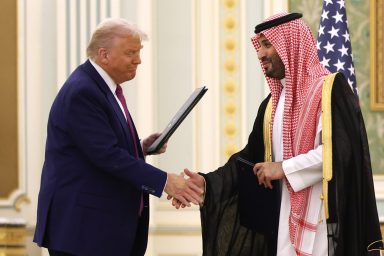
In a recent note, Bank of America (BofA) analysts spotlighted massive AI infrastructure deals in the Middle East as evidence of long-term demand for AI computing power. Among the most notable projects is a partnership between Nvidia, AMD, and Humain, a subsidiary of Saudi Arabia’s Public Investment Fund.
The deal includes:
- 18,000 Blackwell GPUs from Nvidia.
- A $10 billion collaboration between AMD and Humain to deliver 500 megawatts of AI computing capacity to regional data centers.
BofA estimates these projects could generate $3 billion to $5 billion annually, amounting to $15 billion to $20 billion over several years.
‘Sovereign AI’ Emerges as a Major Market Driver
The concept of “sovereign AI”—nations investing directly in AI infrastructure—is reshaping the global market. BofA believes such deals could soon account for over $50 billion annually, contributing significantly to the broader $450 billion to $500 billion global AI infrastructure market.
These sovereign-level initiatives are also helping offset challenges like:
- Power limitations for U.S.-based data centers.
- Export restrictions on U.S. technology to countries like China.
Chip Stocks Set to Benefit From AI Boom
BofA remains bullish on AI chipmakers, reaffirming buy ratings and increasing price targets:
- Nvidia: Price target raised to $160 (from $150).
- AMD: Target lifted to $130 (from $120).
Other beneficiaries include:
- Broadcom and Marvell Technology, key players in AI chip ecosystems.
- Coherent, a leading provider of optical connectivity for AI data centers.
AI Chips: The New Leverage in Trade Talks
AI chips have become central to geopolitical strategy, with GPUs now seen as leverage in U.S.-China trade negotiations. As countries compete to secure technological dominance, high-performance semiconductors are increasingly viewed as critical assets.
BofA notes that despite increasing competition, companies supplying AI infrastructure remain positioned for strong, sustainable demand. Key reasons include:
- Increased spending from cloud and hyperscale providers (2025 capex projected to rise 44% YoY).
- Relaxation of restrictive AI diffusion policies.
- The strategic use of AI chips in trade and diplomatic discussions.
Saudi Arabia: A Priority Market for AI Expansion
According to Wedbush analyst Dan Ives, Saudi Arabia is now a top-priority region for Nvidia—perhaps even ahead of other international markets. Speaking to Fortune, Ives noted that the Middle East could add $1 trillion to the global AI opportunity over the next decade.
“This is a red-carpet rollout,” Ives said. “Saudi Arabia is moving to the front of the line in global AI development.”
He also highlighted the strategic importance of the deal in the broader geopolitical context: “With the situation in China still uncertain, this marks a watershed moment.”
Final Thoughts
AI chips are no longer just technology components—they are strategic assets shaping the future of global trade, economic policy, and diplomatic influence. As sovereign nations and tech giants alike invest heavily in AI infrastructure, companies like Nvidia, AMD, and their supply chain partners are set to lead a new era of innovation and international power dynamics.