
Trump Urges Walmart to Shoulder Tariffs
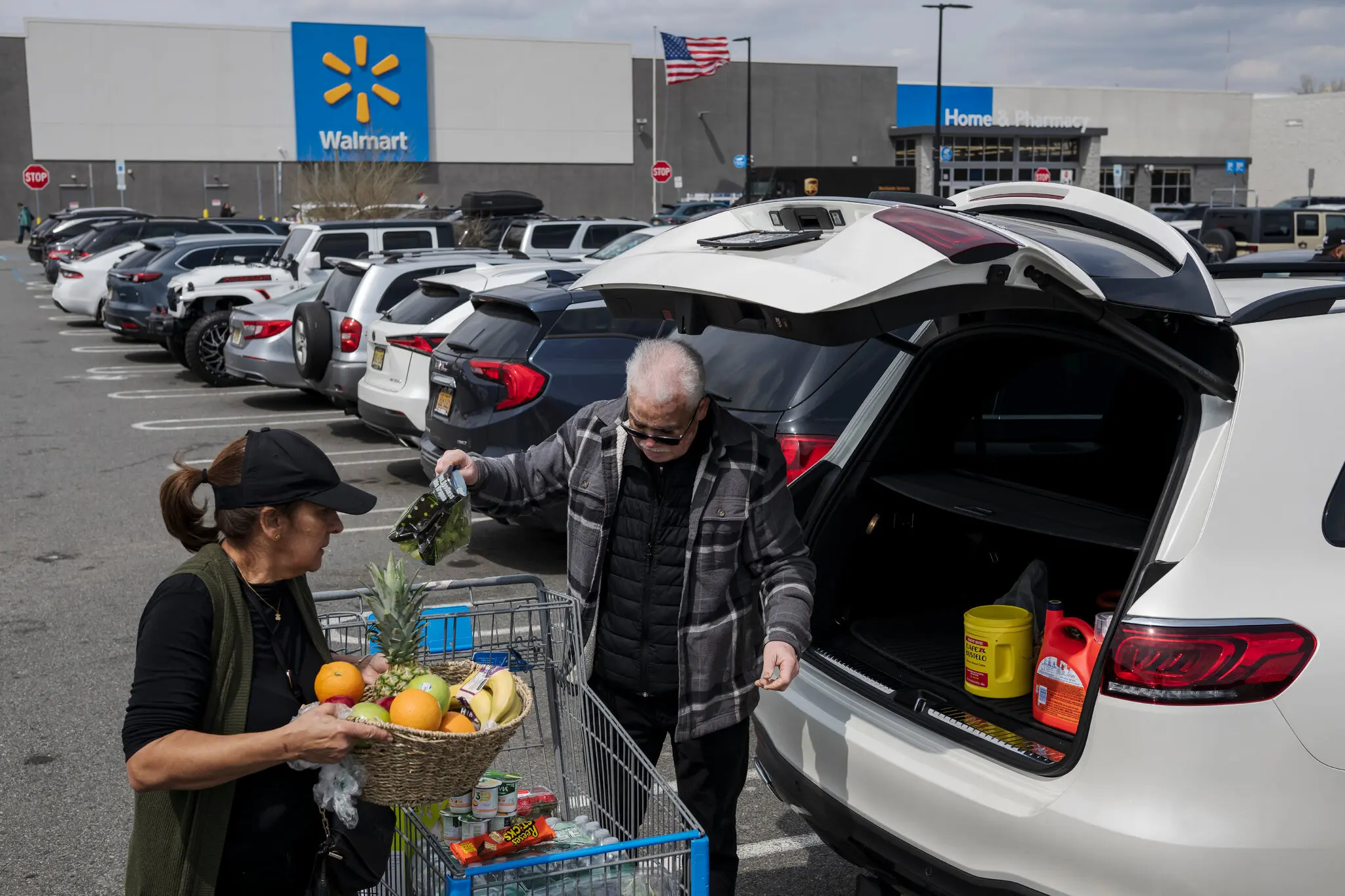
Former President Donald Trump has publicly criticized Walmart after the retail giant warned that U.S. tariffs could lead to higher prices for consumers. Trump insisted that Walmart, which made billions in profits last year, should absorb the added costs rather than passing them on.
“Walmart should STOP trying to blame Tariffs as the reason for raising prices throughout the chain,” Trump posted on Truth Social, his social media platform. “Walmart made BILLIONS OF DOLLARS last year, far more than expected.” He further called on the company to “EAT THE TARIFFS” and keep prices stable, adding, “I’ll be watching, and so will your customers.”
Walmart, the largest retailer in the U.S., said that despite its efforts to keep prices low, it can’t completely shield customers from the impact of tariffs. “We will do our best to keep our prices as low as possible,” said CEO Doug McMillon during a recent call with analysts. However, he acknowledged that Walmart could not “absorb all the pressure” from ongoing trade policies.
Responding to Trump’s criticism, Walmart spokeswoman Molly Blakeman reaffirmed the company’s commitment to affordability. “We have always worked to keep our prices as low as possible and we won’t stop,” she said. “We’ll keep prices as low as we can for as long as we can given the reality of small retail margins.”
Walmart, which serves roughly 90% of Americans and operates over 4,000 stores nationwide, has seen its sales grow by more than 3% to $112 billion in the last quarter. The company expects its revenue to increase by 3–4% over the year. However, due to tariff-related uncertainty, it has withheld profit forecasts for the current quarter.
Roughly one-third of Walmart’s inventory comes from overseas, with a significant portion imported from China and Mexico. While many retailers have temporarily avoided price hikes by stockpiling inventory, the pressure from tariffs is building.
“It’s no surprise prices are starting to rise,” said Ryan Sweet, chief U.S. economist at Oxford Economics. “Businesses were never going to eat all the costs. It’s a matter of raising prices or cutting jobs.” He emphasized that grocery retailers, in particular, are vulnerable due to their slim profit margins.
The warning from Walmart comes as part of broader concerns from U.S. businesses about Trump’s trade policies. Though he recently backed away from imposing the harshest tariffs on Chinese imports, a large portion of U.S.-China trade remains restricted.
Earlier this year, the Trump administration imposed a 145% tariff on Chinese goods, prompting retaliation from Beijing with a 125% tariff on American products. A temporary 90-day agreement has since reduced those rates to 30% and 10%, respectively.
Trump, who has long accused foreign countries of taking advantage of the U.S. through unfair trade practices, defended his tariff policies in a recent Fox News interview. He signaled openness to visiting China to negotiate directly with President Xi Jinping, saying, “I’m using trade to settle scores and to make peace.”
Despite temporarily pausing some tariffs in April, Trump has maintained a minimum 10% tariff on many countries. His tariffs on Canada and Mexico were partly aimed at curbing illegal immigration and drug trafficking. As tensions continue, businesses and consumers alike are bracing for the financial impact of trade disputes, while Trump attempts to balance inflation control with aggressive trade tactics.